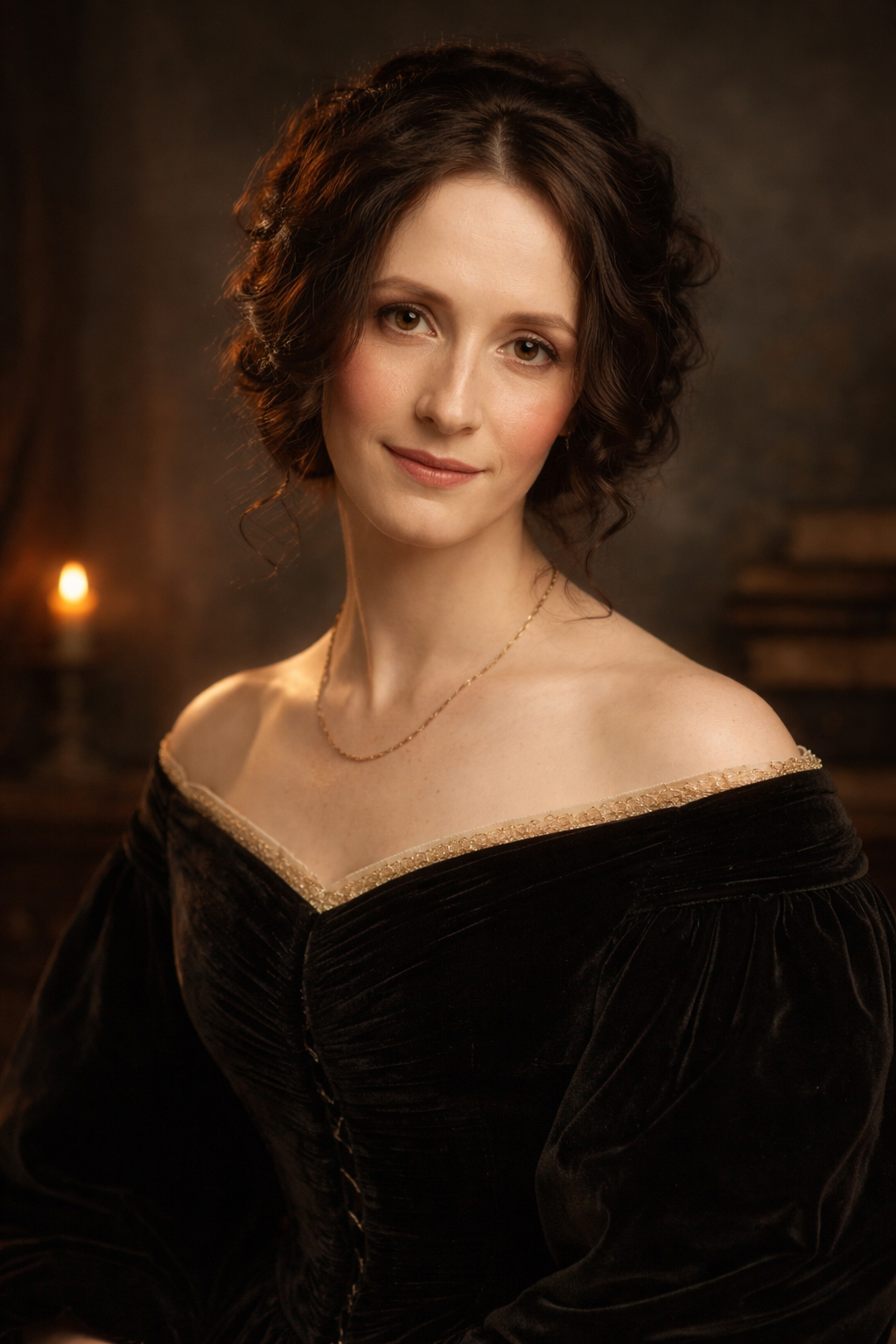

Tee Tate: Frankenstein has been called many things—gothic horror, early science fiction, a philosophical novel. When you were writing it, did you think of it as belonging to any genre at all?
Mary Shelley: I did not think of it in such terms, no. I was interested in a question—what might happen if man were to overstep his bounds and animate lifeless matter? The story grew from that curiosity. If it now resides within many genres, I suspect that is because the question itself is not confined to one. It concerns science, yes, but also morality, responsibility, and the consequences of ambition.
Tee: There’s a quiet intimacy in Frankenstein that often gets overshadowed by its larger themes. The creature’s loneliness, Victor’s isolation—it all feels deeply personal. Was that intentional?
Mary Shelley: It was unavoidable. I was very young when I wrote it, but I had already known loss. The feeling of being set apart, of existing just outside of what others might call belonging—those were not abstract ideas to me. The creature’s solitude is, in many ways, the heart of the novel. His violence is terrible, but it is born of rejection. I wished to explore not only what he became, but why.
Tee: Your work is often cited as foundational to science fiction, yet it also resists the more mechanical or technological focus we see later in the genre. What did you believe stories about science should do?
Mary: I think they should question, rather than celebrate. The pursuit of knowledge is not, in itself, dangerous—but it becomes so when it is divorced from consideration of consequence. Victor does not pause to ask whether he should create life, only whether he can. That, to me, is the true horror. Science, like any power, requires restraint. Without it, the results may be…unfortunate.
Tee: There’s a long tradition now of writers—especially women—using genre fiction to explore identity, power, and what it means to exist within or outside of society. Did you feel you were pushing against expectations when you wrote Frankenstein?
Mary: I was aware that I was writing in a space not entirely welcoming to me, yes. But I did not set out to defy expectation so much as to tell the story that compelled me. If that act itself was considered unusual, then perhaps the expectation was the thing in need of adjustment. Stories should not be constrained by who is permitted to tell them.
Tee: If you were writing today, in a world where science has advanced in ways even Victor might not have imagined, what question would you want to ask now?
Mary: I think I would ask the same question, though it would take a different form. Not how life is created, but how it is valued. We have become very adept, it seems, at altering the world—and perhaps even ourselves. But the question remains: what do we owe to what we create? And perhaps more importantly, what do we owe to one another?